
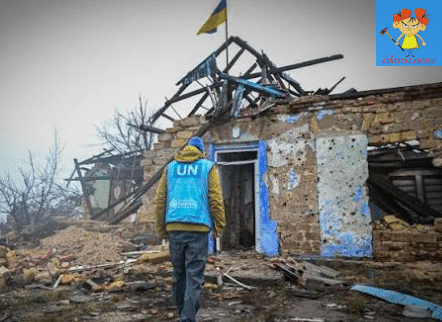
The International Bill of Human Rights and Modern Crises: Legal Conflicts in Ensuring Human Rights in Ukraine
In the 21st century, it is not only the power of weapons that wins, but also the power of values. International law is undergoing a test of strength today, and in this struggle, the winner will be the one who, even in the conditions of total war, finds the strength to remain faithful to the fundamental principles of justice.
Introduction
In 2026, the global legal community marks significant milestones in the history of International Human Rights Law (IHRL): the 60th anniversary of the International Covenant on Civil and Political Rights (ICCPR) and the International Covenant on Economic, Social and Cultural Rights (ICESCR), the 75th anniversary of the Convention Relating to the Status of Refugees, and the 40th anniversary of the UN Declaration on the Right to Development. Together with the 1948 Universal Declaration of Human Rights, these documents constitute the International Bill of Human Rights—the «gold standard» designed to guarantee the dignity and freedoms of every individual regardless of geopolitical cataclysms.
However, the protracted armed conflict in Ukraine has posed an unprecedented challenge to this normative architecture, exposing deep conflicts between the imperatives of national security, the norms of International Humanitarian Law (IHL), and universal human rights standards.
The purpose of this article is to provide a comprehensive legal analysis of the key legal contradictions arising both in the context of Ukraine’s fulfillment of its international obligations and in the sphere of protecting the rights of Ukrainian citizens inside the country and abroad.
The International Bill of Human Rights and the Legal Regime of Martial Law
In the face of repelling foreign aggression, Ukraine lawfully utilized the mechanism of derogation (suspension of obligations) provided for by Article 4 of the ICCPR and Article 15 of the European Convention on Human Rights (ECHR). Kyiv officially notified the UN Secretary-General and the Council of Europe regarding restrictions on several rights, including freedom of movement, inviolability of the home, and freedom of expression.
The primary legal conflict here lies in the plane of the principles of proportionality and strict necessity dictated by the exigencies of the situation.
International bodies (specifically, the UN Human Rights Committee) emphasize that any derogations must be temporary and cannot entirely nullify the essence of a right.
In the Ukrainian context, several issues remain debatable:
-
- The prolonged ban on leaving the country for military-aged men (which affects freedom of movement under Art. 12 of the ICCPR and the right to family life).
- The concentration of the media space into a single consolidated television news marathon, balancing on the edge between information security and freedom of expression (Art. 19 of the ICCPR).
At the same time, Art. 4 of the ICCPR clearly defines absolute (non-derogable) rights, such as the right to life (Art. 6) and the prohibition of torture (Art. 7). Ensuring these rights under combat conditions and when citizens are in occupied territories or captivity requires a strict delineation of responsibilities between IHRL and IHL.
Conflicts in the Sphere of Forced Displacement: On the 75th Anniversary of the Refugee Convention
The massive migration crisis caused by the war has led to a unique legal phenomenon: the dualism of the international legal status of displaced persons.
Instead of the classic procedure for granting refugee status based on the 1951 Convention, European Union countries applied the Temporary Protection Directive. In 2026, as the legal deadlines for these temporary programs expire, a sharp legal conflict has emerged.
If hostilities continue while the legal basis for temporary protection ends, millions of Ukrainians find themselves in a state of legal uncertainty. Transferring these individuals to the general procedure of the 1951 Convention threatens to paralyze EU migration agencies, while forced return would violate the absolute international principle of non-refoulement.
Within Ukraine itself, the status of Internally Displaced Persons (IDPs) also generates conflicts under the ICESCR.
The state’s limited budgetary resources complicate the realization of IDPs’ rights to adequate housing (Art. 11 of the ICESCR) and social security (Art. 9 of the ICESCR), necessitating the development of new flexible mechanisms for international donor assistance.
Erosion of Socio-Economic Rights and the Right to Development
The 40th anniversary of the UN Declaration on the Right to Development (1986) highlights how a protracted war destroys the very basis of human progress. According to the Declaration, the state is obliged to create favorable conditions for the realization of economic and social rights.
In Ukraine, a forced erosion of obligations under the ICESCR is observed due to the total destruction of critical and civilian infrastructure.
-
- The right to the highest attainable standard of physical and mental health (Art. 12 of the ICESCR): is blocked by regular attacks on the energy and medical systems.
- The right to education (Art. 13 of the ICESCR): is distorted by the necessity of widespread online learning and the lack of safe bomb shelters.
The conflict lies in the fact that international covenants place primary responsibility for ensuring these rights on the national government. However, under conditions of war and ecocide (e.g., the mining of agricultural lands), fulfilling these norms is objectively impossible without a direct link to the international legal responsibility of the aggressor state and reparations mechanisms.
Legal Standards of Non-Discrimination and the Qualification of Collaborationism: In the Context of the Durban Process
The context of the 25th anniversary of the Durban Declaration and Programme of Action (DDPA), observed at a high level at the UN, presents the Ukrainian legislator with a highly complex task: to prevent the stigmatization and discrimination of vulnerable groups within a society polarized by war, and to respond to the new challenges of the digital age (such as hybrid hate speech in the media space).
The main internal conflict in Ukraine in this area is the correlation between the provisions of Article 111-1 of the Criminal Code of Ukraine («Collaborative Activity») and international human rights obligations (ICCPR, ICESCR) prohibiting discrimination on any grounds, as well as the norms of the Fourth Geneva Convention relative to the Protection of Civilian Persons in Time of War. Domestic legislation criminalizes a wide range of actions in the temporarily occupied territories (TOT), including working in utility services, education, or medicine. At the same time, international standards rooted in the Durban process require the protection of civilians caught as hostages of conflicts.
International legal standards require a clear distinction between:
-
- Voluntary and intentional assistance to the occupying authorities aimed at harming national security.
- Activities ensuring the basic survival of the civilian population (doctors, firefighters, teachers), which are protected by the ICESCR (the right to work) and IHL norms.
A lack of flexibility on this issue creates risks of widespread social isolation for millions of Ukrainian citizens after the de-occupation of territories, which directly contradicts the spirit and literal requirements of the Durban Declaration.
Conclusion
An analysis of the Ukrainian case through the prism of the International Bill of Human Rights demonstrates that classic international conventions need adaptation to the realities of 21st-century hybrid wars.
The main conclusion of the study is that even under conditions of legitimate derogation of rights to protect state sovereignty, national legislation must not cross the line where the core of human dignity is destroyed.
To minimize legal conflicts, Ukraine needs to:
-
- Ensure maximum transparency and proportionality regarding restrictions on citizens’ rights under martial law.
- Reform collaborationism legislation, aligning it with the principles of humanitarian law.
- Collaborate with international partners to develop a long-term legal strategy for Ukrainian refugees whose status requires a new, firm legal foundation.
Prospects for Ukraine’s International Initiatives: The Role of Diplomacy and National Institutions
At the current stage, Ukraine has a historic opportunity to act not merely as a recipient of aid, but as an active initiator of the modernization of global human rights and humanitarian law.
The law enforcement experience accumulated by the Ukrainian state under conditions of total war serves as a unique basis for reforming international institutions, which are currently showing signs of a systemic crisis.
Strategic International Initiatives of Ukraine:
-
- The «Pact 2026: A New Global Framework for Displaced Persons» Initiative: convening a special conference under the auspices of the UNHCR to develop a mechanism for a «hybrid status of economic transit.» This status should allow refugees from protracted conflict zones to commute flexibly between Ukraine and the EU (to restore businesses, study, or visit families) without immediately losing European safety guarantees, thereby relieving critical pressure on European migration systems.
- International Convention on the Protection of Civil Infrastructure and the Recognition of Ecocide: institutionalizing the norm that targeted infrastructure terror (blackout warfare) constitutes a direct defeat of a person’s right to life and development. The initiative aims to supplement the Rome Statute of the International Criminal Court (ICC), establishing an automatic mechanism for compensating victims from the frozen sovereign assets of the aggressor state.
- Reform of the Institution of Protecting Powers (under the Geneva Conventions): diplomatically securing an mandatory status for a «Digital Ombudsman-Mediator» (represented by a pool of neutral states). This group should be endowed with a standing UN mandate to conduct remote satellite monitoring of detention facilities and verify lists of prisoners of war and civilian hostages through independent digital channels, bypassing the need for situational consent from the detaining party.
Institutional Implementation Mechanism:
Realizing these initiatives requires synergy between foreign policy and domestic state institutions across two main circuits:
-
- The External (Diplomatic) Circuit — Ministry of Foreign Affairs (MFA) and Permanent Missions to the UN and CoE: The key task of the diplomatic corps is a fundamental re-engineering of the legal narrative in dialogue with the countries of the Global South. Advancing the Ukrainian agenda in negotiations with countries of Africa, Latin America, and Asia should rely on the authority and terminology of the Durban human rights process. Ukrainian diplomacy can use the platform of its 25th anniversary to shift the focus from a «European crisis» to a «struggle against neocolonialism.» The aggressor’s actions in the TOT—forced russification, persecution of indigenous peoples (specifically Crimean Tatars), and demographic engineering—must be qualified as racial discrimination, xenophobia, and cultural apartheid. Since the Durban Declaration is a foundational historical manifesto for the states of the African Union and Latin America, appealing to it allows for a dialogue in a unified legal language, proving that the destruction of Ukraine’s food security is a direct blow to the Global South’s right to development.
- The Internal Circuit — Ministry of Justice, Office of the Ombudsman, Verkhovna Rada: National institutions must ensure the absolute legal integrity of domestic processes. This implies immediately aligning Art. 111-1 of the Criminal Code of Ukraine (collaborationism) with the Fourth Geneva Convention by decriminalizing basic humanitarian activities in the TOT. Concurrently, the Office of the human rights Ombudsman must scale up the operation of the Unified Digital Platform for Recording IHRL Violations, the data from which will automatically convert into internationally verified legal dossiers for the ICC and the ECHR.
Naturally, whether this massive package of legal reforms transitions from academic theory into real UN resolutions depends entirely on the President of Ukraine and the Ministry of Foreign Affairs, who constitutionally possess the monopoly on shaping and directing the state’s foreign policy. It is up to them to decide whether Ukraine is ready to don the mantle of a global architect of a new world order.
Granted, given the traditionally tectonic speed of the domestic diplomatic apparatus—where coordinating a single diplomatic note can sometimes outlast an average 21st-century armed conflict—there is a risk that by the time these initiatives are launched, international law will either have completely evolved on its own or turned into an archaeological monument.
Nevertheless, the window of opportunity for Ukrainian diplomacy remains open for now, and one hopes that its pace can catch up with the dynamics of the challenges confronting the country.
For ultimately, in the 21st century, it is not only the power of weapons that wins, but also the power of values. And in this struggle, the winner is the one who, even in the conditions of total war, finds the strength to remain faithful to the fundamental principles of justice.
References:
-
- High-level meeting of the General Assembly on the twenty-fifth anniversary of the adoption of the Durban Declaration and Programme of Action (September 2026) / United Nations. — URL: un.org.
- Declaration on the Right to Development: adopted by General Assembly resolution 41/128 of 4 December 1986 / United Nations.
Last Updated on 16.10.2026 by iskova