
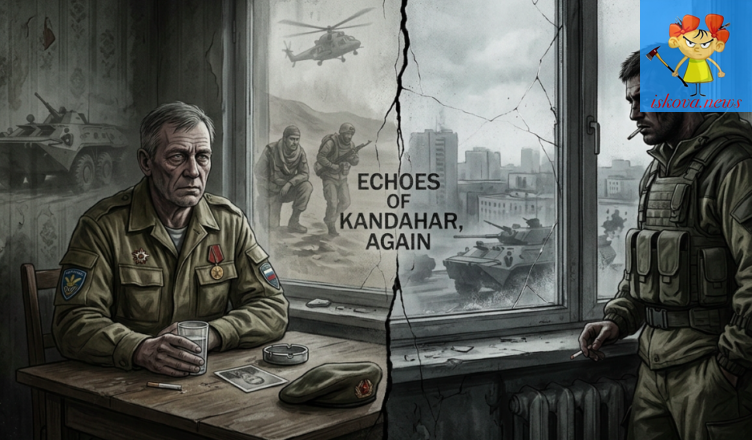
The Echo of Kandahar: How the «Afghan Syndrome» Reshaped Crime and Culture in the ’90s and Where It Resonates Today. Historical Parallel: From Afghanistan to the War in Ukraine
The Soviet military campaign in Afghanistan (1979–1989) left a profound mark on history, comparable in its scale of shattering public consciousness to the «Vietnam Syndrome» in the United States. The return of hundreds of thousands of young people to a collapsing country, combined with economic collapse and a total lack of state support, gave rise to a phenomenon known as the «Afghan Syndrome.»
This phenomenon did not just break the lives of an entire generation; it became a powerful catalyst for the criminal revolution of the 1990s, shaped a distinct layer of marginal culture, and established patterns of aggression that have resurfaced decades later in modern military conflicts, including the war in Ukraine.
Statistics of the Afghan Catastrophe
The scale of long-term social consequences is directly tied to the volume of human losses and trauma:
-
- Size of the Contingent: Approximately 620,000 Soviet military personnel passed through the combat zones in Afghanistan.
- Human Losses: Officially, 15,031 people are listed as killed or deceased from wounds, though independent historians estimate the figure to be up to 26,000.
- Wounds and Disabilities: More than 53,000 people received wounds, concussions, or severe injuries. Officially, 10,751 people were left with permanent disabilities.
- Psychological Trauma: According to sociological and medical studies from the early 1990s, up to 70% of veterans suffered from pronounced forms of Post-Traumatic Stress Disorder (PTSD). At the same time, professional psychological rehabilitation was practically non-existent in the USSR and early Russian Federation.
Medical and Psychological Research: The Anatomy of the «Afghan Syndrome»
To deeply understand the nature of the «Afghan Syndrome,» it is crucial to examine the clinical and sociological research conducted by military medics, psychiatrists, and civilian scientists from the late 1980s through the 2000s. This research scientifically documented exactly how war broke the psyche of combatants.
Studies on the Scope of PTSD (S.M. Kirov Military Medical Academy)
Specialists from the Leningrad Military Medical Academy were among the first to systematically study this issue. According to their data collected in the early 1990s:
-
- Hidden PTSD: More than 70% of Afghanistan veterans exhibited signs of PTSD of varying severity.
- «Combat Stress»: Doctors recorded that in 30% of those examined, PTSD symptoms were chronic and, instead of fading over time, actually worsened (known as «delayed syndrome»). The soldiers’ minds remained at war, reacting to peaceful stimuli (loud pops, screams) as if they were imminent combat threats.
Institute of Psychology of the Russian Academy of Sciences (RAS) Research
Scientists at the RAS, under the leadership of Professor N.V. Tarabrina, conducted multi-year studies of veterans of local conflicts. Psychologists identified the core markers of the «Afghan Syndrome»:
-
- The «Outsider» Syndrome: About 80% of respondents reported a profound sense of alienation from civilian society. Veterans experienced a phenomenon of «negative identity»—they could not find baseline meaning in peaceful life because their core values (mutual aid, a strict division between friend and foe) proved useless in the commercialized 1990s.
- Progressive Aggression: Psychologists proved that without proper rehabilitation, PTSD transforms into permanent destructive personality changes. Aggression, suppressed for years, eventually manifested either inward (self-harm) or outward toward others.
Medical Statistics on Destructive Behavior
Data from the Ministry of Health of the Russian Federation and independent sociologists in the late 1990s exposed catastrophic figures:
-
- Alcoholism and Drug Addiction: Up to 60% of Afghanistan veterans regularly drowned their PTSD symptoms (flashbacks, insomnia, panic attacks) in alcohol or substitutes. Narcotic dependency brought back from Afghanistan (where opium was easily accessible) was recorded in every tenth veteran who came to the attention of medical professionals.
- Suicide Crisis: By 1994 (just five years after the troop withdrawal), the suicide rate among Afghan veterans multiplied significantly compared to the national average for the same age group. Physicians themselves referred to this as «prolonged death»—when the war caught up with a person already at home.
- The Problem of «Secondary Traumatization»: Psychological studies of veterans’ families showed that at least 40% of the wives and children of servicemen suffered from the syndrome. The atmosphere of domestic violence, unpredictable outbursts of rage, and emotional detachment traumatized the next generation.
Doctors and psychologists agreed on one key conclusion: the «Afghan Syndrome» is not a whim or bad character, but a severe, systemic injury to the psyche caused by exposure to extreme conditions. Because the concept of PTSD was recognized too late in the USSR, and the state rehabilitation program effectively failed, the criminal underworld and alcohol became surrogate «therapies» for hundreds of thousands of traumatized people, leading to the social catastrophe of the 1990s.
From Clinical Diagnosis to Criminal Revolution: How PTSD Turned into a Weapon for Racketeers
The scientific conclusions of psychiatrists regarding «negative identity» and accumulated aggression found their most terrifying validation on the streets of post-Soviet cities. Under conditions where official medicine and social services proved powerless, and a collapsing economy left young men without a means to survive, the only structure that offered veterans an understandable integration mechanism was organized crime. Psychological trauma, left untreated in hospital wards, transformed into the primary resource for forging a new type of criminality.
The «Afghan Syndrome,» Crime, and Organized Crime Groups (OCGs) of the ’90s
In the early 1990s, demobilized soldiers and officers faced the destruction of the state for which they had risked their lives. The military profession was devalued, pensions turned into pennies, and society sought to forget an unpopular war. Under these conditions, the unique skills of veterans—tactical thinking, cold-bloodedness under fire, and the ability to handle weapons and explosives—proved highly sought after by organized crime.
Afghanistan veterans (alongside former athletes and special services personnel) became an ideal recruitment pool for emerging organized crime groups (OCGs). They filled the roles of hitmen, security chiefs, enforcers, and «liquidators.»
The Russian Union of Afghanistan Veterans (RSVA) and Economic Crime
The state granted Afghan organizations massive tax and customs exemptions (for instance, on the import of alcohol and tobacco), originally intended as a way to self-finance rehabilitation centers. In practice, these privileges attracted colossal amounts of criminal money. A brutal criminal war erupted around «Afghan» funds for control over financial flows. A stark symbol of this was the 1996 Kotlyakovo Cemetery bombing in Moscow, where a blast resulting from infighting between veteran factions killed 14 people and injured around 30.
Impact on 1990s Culture
The «Afghan Syndrome» shaped a powerful cultural layer saturated with fatalism, resentment toward the state, and the romanticization of combat brotherhood.
Musical Direction: The «Afghan Song»
A unique genre of army song emerged (bands like «Blue Berets,» «Kaskad,» and the work of Igor Morozov). Distributed on cassette tapes, these songs combined harsh trench truths, grief for fallen friends, and open criticism of the party leadership. Later, this genre partially merged with the Russian chanson of the ’90s, where the motifs of a veteran misunderstood by society intertwined with criminal romance.
Cinema and Literature
The image of the «Afghan vet» became central to post-Soviet art. He was portrayed either as a tragic hero trying to find justice in a corrupt world or as a dangerous, unpredictable sociopath.
-
- The movie «Afghan Breakdown» (1991) vividly demonstrated the moral crisis of the army on the brink of the country’s collapse.
- The character of Danila Bagrov in the cult duology «Brother» (1997) and «Brother 2» (though by the plot he served in the First Chechen War, which was a direct continuation of Afghan-era institutional deformations) is a classic portrait of a person with PTSD. He divides the world strictly into «us» and «them,» resolves any problem through violence, and is utterly incapable of adapting to civilian life.
Historical Parallel: From Afghanistan to the War in Ukraine
The phenomenon of the «Afghan Syndrome» is important not just as a historical fact, but as a model for understanding contemporary processes. Sociologists and military experts note that the ongoing war in Ukraine is generating a similar, yet exponentially larger crisis within Russian society.
| Comparison Parameters | The Afghan War (1979–1989) | The War in Ukraine (since 2022) |
|---|---|---|
| Scale of Involvement | ~620,000 people over 10 years. | Millions of people (mobilized, contract soldiers, convicts) over several years. |
| Level of Violence and PTSD | Localized guerrilla warfare. High levels of PTSD, but suppressed by Soviet discipline. | Full-scale, high-intensity conventional warfare. An unprecedented level of severe psychiatric disorders is expected. |
| Criminal Element | Veterans entered crime after the war due to unemployment. | Tens of thousands of convicts («Storm-Z», PMCs) enter the front directly from prisons, then return to society with combat experience. |
| Societal Reaction | Silencing, denial of the topic, gradual recognition of the mistake. | Polarized division of society, cultivation of militarism, aggression as a social norm. |
A sharp rise in violent crimes (murders, robberies, domestic abuse) committed by returning combatants is already being recorded in the Russian Federation. The Afghan experience shows that the return of hundreds of thousands of individuals with heavy combat experience and deformed psyches into an environment of economic hardship inevitably leads to long-term criminalization and social tension that society spends decades resolving.
Architects of Catastrophe: The Immunity of Supreme Power Faced with Collapse
When analyzing the political responsibility for decision-making, historians and political scientists frequently note an important pattern: the leaders who initiate prolonged conflicts remain personally immune to the long-term social consequences of their actions.
-
- The Historical Precedent (Leonid Brezhnev): The decision to deploy Soviet troops to Afghanistan in December 1979 was made by a narrow circle of members of the Politburo of the CPSU Central Committee, with General Secretary Leonid Brezhnev as the pivotal figure. Historians emphasize that Brezhnev himself passed away in 1982—at the very beginning of the conflict. He never witnessed the peak of combat losses, the prolonged withdrawal of troops, or the devastating socio-criminal crisis of the 1990s. The entire burden of the «Afghan Syndrome» and economic collapse fell squarely on the shoulders of ordinary citizens and subsequent state leaders.
- The Modern Parallel (Vladimir Putin): Experts tie identical processes to Russian President Vladimir Putin, who launched full-scale military actions against Ukraine in 2022. Due to age and the insular nature of supreme power, the demographic catastrophe, deep criminalization of society, and severe social crisis caused by the PTSD of hundreds of thousands of combatants will become a long-term problem for future generations. The initiators of massive strategic decisions are generally shielded from the immediate manifestations of daily social decay by state security apparatuses and the time factor, leaving the resolution of systemic trauma to the civil society of the future.
Global Aftermath: The Echo of Two Wars and the Price to Be Paid for Decades
The Afghan campaign clearly proved that the social and psychological cost of war always vastly exceeds official combat casualty figures. However, the scale of the current conflict guarantees that the coming «Ukrainian Syndrome» will become the heaviest crisis in the modern history of both countries, though its character for each society will be fundamentally different.
Consequences for the Russian Federation: A Criminal Renaissance and Militarization
For Russia, the scenario largely mirrors the Afghan and Chechen experiences, but on a fundamentally different, far more massive scale:
-
- A New Type of Criminal Expansion: Unlike the 1990s, when veterans turned to OCGs primarily because of unemployment, today thousands of individuals who were originally recruited to the front from correctional colonies are returning to society. The combination of a criminal past, severe frontline PTSD, and combat skills is already reflecting in the statistics of violent crimes across Russian regions.
- The Legitimation of Violence: The integration of combat participants into the political and educational elite changes societal markers. The state’s attempt to substitute professional psychological help with the ideological promotion of aggression merely freezes the trauma, turning it into a long-term factor of internal instability.
- The Economic Hangover: Sooner or later, state payouts to combatants and disabled veterans will decrease, and the militarized sector of the economy will face stagnation. People with deformed psyches will find themselves in a prolonged socio-economic crisis, which will inevitably revive the worst criminal practices of the past.
Consequences for Ukraine: Collective Trauma of Survival and Challenges of Reconstruction
For Ukraine, which is fighting a defensive war, the consequences lie within the realm of an all-national psychological and demographic trauma:
-
- Collective PTSD and the Depth of Impact: In Ukraine, traumatization has affected not only hundreds of thousands of military personnel but also millions of civilians (refugees, residents of frontline areas, people who survived occupation and constant missile strikes). An entire generation of children, whose upbringing is occurring under constant threat, has been subjected to immense psychological pressure.
- The Crisis of Veteran Reintegration: Following the end of hostilities, hundreds of thousands of mobilized civilian specialists (teachers, engineers, workers) will have to return to peaceful professions. The gap in the perception of reality between the frontlines and the home front will require the state to build an unprecedentedly large system for psychological and social adaptation.
- The Demographic Trench: Colossal losses among the young, working-age population, combined with millions of refugees who may not return from abroad, will create a severe deficit of human resources needed to rebuild the country, multiplying the strain on an already traumatized social sphere.
Conclusion
History has completed another turn.
If in 1989 the Soviet leadership believed that with the withdrawal of troops from Afghanistan the page had been turned, the subsequent 1990s harshly proved the opposite: war always comes back home—in coffins, in the deformed psyches of the survivors, in rampant banditry, and in the shattered lives of veterans’ families.
Today, both Russia and Ukraine stand on the precipice of a long-term socio-psychological crisis. But while for Ukraine overcoming this trauma will be the key to the survival and restoration of the nation, for Russia the «Ukrainian Syndrome» risks becoming a catalyst for systemic internal degradation—the consequences of which society will have to untangle for much longer than the preeminent echo of Afghanistan.
Last Updated on 06.11.2026 by iskova