
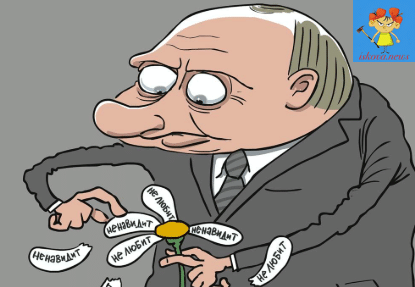
Putin’s 74th Birthday: A Masterclass in Geopolitical Loneliness. From Brezhnev’s Galas to Kim’s Love Letters: How Putin’s Birthday Celebrations Signal a New Era of Soviet-Style Stagnation
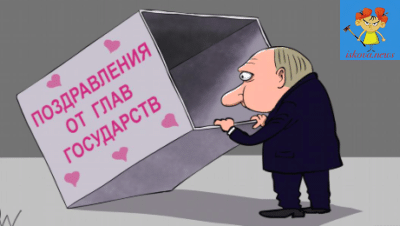
While the Western world continued to send packages (of the strictly sanctioned variety), the «Multipolarity Lovers’ Club» delivered tons of warm telegrams.
Defying the expectations of skeptics, Vladimir Putin’s phone did not stop ringing for a single minute.
Granted, the geography of these calls turned out to be less of a «surprise» and more of a roll call: the leaders lining up on the wire were the very same ones whose names the US Department of the Treasury knows by heart from its sanctions lists.
Kim Jong Un predictably competed in poetic flair with Alexander Lukashenko, while Xi Jinping made a diplomatically shrewd opening move by sending his postcard well in advance.
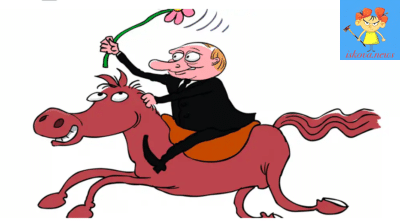
It was a true triumph of geopolitical loneliness—one that somehow managed to attract a waiting line stretching across half of Eurasia.
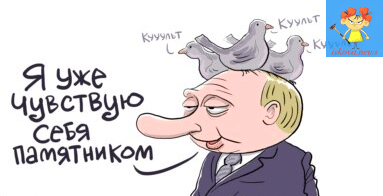
Main Lines Busy: The CIS Telephone Marathon
The bulk of the congratulations, as protocol dictates, was provided by Russia’s closest neighbors. For the leaders of the CIS countries, October 7 has turned into a mandatory diplomatic workout—the «hurry up and reach the Kremlin» exercise. Presidents of Azerbaijan, Kazakhstan, Kyrgyzstan, Tajikistan, Turkmenistan, and Uzbekistan all disciplined themselves into the telephone queue.
Nikol Pashinyan sparked particular amusement among observers. The Prime Minister of Armenia, who has recently been regularly threatening to freeze his country’s CSTO membership for good and head West, decided on this festive day that while geopolitics is one thing, good manners must not be forgotten. The phone call from Yerevan proved once again that multi-vector diplomacy is a highly flexible concept—especially when the birthday boy still holds plenty of leverage over the region.
The Poetry Battle: Pyongyang vs. Minsk
While the leaders of Central Asia called strictly on business and within the bounds of etiquette, a true clash of titans unfolded in the «Warmth and Eloquence» category.
Alexander Lukashenko traditionally acted as the chief guardian of union bonds, but this time his loyalty was eclipsed by his Far Eastern rival.
Kim Jong Un decided to raise the stakes and sent an epistolary masterpiece to the Kremlin that practically radiated geopolitical warmth. The North Korean leader officially addressed Vladimir Putin as his «dearest friend.»
In his telegram, Kim spared no compliments, noting that over the past years, under Putin’s «outstanding and skillful leadership,» Russia has transformed into a «powerful and prosperous country.» However, the main «militant salute» from Pyongyang lay in a promise of eternal loyalty: Kim expressed unshakable confidence that the Russian people would surely achieve victory in their «just and sacred war.» Against the backdrop of such passionate confessions, routine telegrams from Nicaragua and Venezuela looked like dry notices from a utility company.
Beijing’s Exclusive Status
While Pyongyang competed in poetry, Chinese President Xi Jinping once again demonstrated who the master strategist is in this multipolar «sandbox.»
The Chinese leader chose not to push through the general telephone crowd on October 7 and sent his congratulations in advance.
This elegant diplomatic maneuver subtly hinted that Beijing doesn’t need to wait for an official calendar date to make its presence felt. The message arrived ahead of schedule, cementing the special status of their «no-limits partnership»—one where it is pleasing to show attention to a junior ally, but strictly on one’s own terms and schedule.
A Surprise from Kyiv: The Ukrainian Connection
The absolute cherry on top of this birthday cake, however, was a character the Kremlin likely expected the least. A genuine sensation in the information space was caused by Artem Dmytruk, a fugitive Member of the Ukrainian Parliament (Verkhovna Rada).
While official Kyiv was calculating the damage from overnight air raids, Dmytruk apparently decided to go all-in on his new role as the «chief oppositionist in exile» and publicly joined the congratulations.
Etching one’s name into the same list as Masoud Pezeshkian and Kim Jong Un is a move requiring either supreme cynicism or utter desperation. To complete the picture, the only thing missing was Dmytruk singing «Many Years to You» in a duet with pop singer Nadezhda Babkina, who also made her mark in the holiday chronicles.
Back to the Stagnation Era: Geopolitical Import Substitution
Watching this festive telephone marathon, it is hard to shake off a sense of déjà vu. The atmosphere of unbreakable loyalty and endless adulation irresistibly recalls the golden era of Soviet stagnation—specifically, the legendary 70th birthday of Leonid Brezhnev in December 1976.
However, looking closer at the details, it becomes clear that the Brezhnev-scale stability has undergone some serious geopolitical import substitution by 2026.
Back then, half a century ago, it wouldn’t have crossed the minds of Soviet bloc leaders to limit themselves to text messages. Todor Zhivkov, Erich Honecker, and Nicolae Ceaușescu flew to Moscow in person, forming a physical rather than a virtual queue to present the General Secretary with yet another Hero star from their respective countries.
Furthermore, in 1976, the «Western world» wasn’t sending sanctions packages; it was sending official congratulations from Washington and Paris under the policy of «détente,» and the President of Finland sat in person at the Kremlin’s banquet table.
In 2026, the casting has worn noticeably thin. Instead of a lavish summit of world leaders, we see a modest Zoom-style conference call with CIS heads of state. Instead of official recognition from the West, there is a bizarre greeting from a fugitive Ukrainian MP.
Only the cosmonauts in orbit and the Patriarch on Earth hold the line. Granted, while God wasn’t exactly encouraged in the Kremlin under Brezhnev, Patriarch Kirill now successfully compensates for the absence of European guests by proclaiming Putin’s rule to be «by the providence of God.»
Conclusion
The celebration has drawn to a close, the Kremlin’s servers are cooling down, and US Treasury officials are lazily updating their databases. Vladimir Putin‘s 74th birthday clearly demonstrated that the attempt to recreate a Brezhnev-sized scale of adoration in modern times yields only a lightweight demo version.
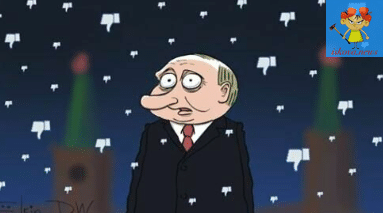
The «total isolation» so long discussed in Washington looks rather peculiar, but the «global recognition» trumpeted in Moscow has shriveled to a tight circle of Asian partners, Central Asian neighbors, and one stray Ukrainian politician.
The era of stagnation has diminished in scale, but it has remained true to its traditions.
In the end, in a world where old alliances are snapping, it feels quite pleasant to lean on those who simply have nowhere else to go from this Eurasian boat.
Last Updated on 08.10.2026 by iskova