

Crashers at Someone Else’s Anniversary: How the Russian Foreign Ministry Spokeswoman Defends UN Covenants from «Harmful» Human Rights
In late March 2026, the UN Human Rights Council (HRC) adopted a Russian-sponsored resolution, A/HRC/RES/61/7, marking the 60th anniversary of the International Covenants on Human Rights: the document was backed by 26 countries (Angola, Benin, Brazil, Burundi, China, Colombia, Côte d’Ivoire, Cuba, Democratic Republic of the Congo, Egypt, Ethiopia, Gambia, Ghana, India, Indonesia, Iraq, Kenya, Kuwait, Malawi, Mauritius, Mexico, Pakistan, Qatar, South Africa, Thailand, and Vietnam), no delegation voted against it, and 21 states abstained (Albania, Bolivia, Bulgaria, Chile, Cyprus, Czechia, Dominican Republic, Ecuador, Estonia, France, Iceland, Italy, Japan, Marshall Islands, Netherlands, North Macedonia, Republic of Korea, Slovenia, Spain, Switzerland, and the United Kingdom).
Moscow itself did not cast a vote, as its membership in the Council has been suspended since April 2022; however, this outcome was preceded by active behind-the-scenes lobbying by Russian diplomats in Geneva.
As UN observers noted in comments to AFP (reported by The Japan Times), the Russian delegation deliberately drafted a maximally neutral, «ceremonial» text devoid of sharp language so that countries would find it diplomatically awkward to vote against the very fact of a human rights anniversary, secured 38 co-sponsors, and mobilized partners across BRICS and the Global South (including China, which took the floor to criticize the «politicization» of the Council)—effectively using the jubilee agenda as a battering ram to return to international platforms.
At first glance, this reads like a plot for political satire: a state expelled from the HRC over its aggression and having systematically purged its own domestic legislation of any form of dissent steps forward as the chief defender of the «gold standard» of human rights.
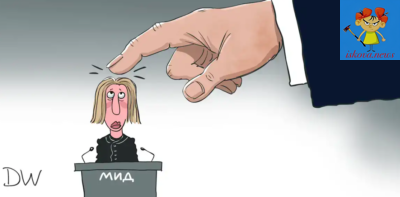
It is precisely this stance that Russian Foreign Ministry Spokeswoman Maria Zakharova outlined in her talking points for a roundtable in Ufa—points that, when checked against the norms of international law, unravel into a series of manipulations.
The «Gold Standard» and the UN Vote: Truth Wrapped in Manipulation
Formally, Zakharova relies on indisputable facts: the International Covenant on Civil and Political Rights (ICCPR) and the International Covenant on Economic, Social and Cultural Rights (ICESCR) were indeed adopted by the UN General Assembly on December 16, 1966, and entered into force in 1976.
The results of the Geneva vote on March 27, 2026, are also cited accurately.
However, framing the abstention of 21 countries as a display of «Western double standards» is a pure distortion of context.
European Union countries and their partners did not oppose the anniversary of the covenants: as early as March 24, 2026, they issued their own joint statement marking the 60th anniversary of these instruments. What prompted them to abstain from the Russian draft was not indifference to human rights, but the track record of its author.
In April 2022, the UN General Assembly adopted Resolution ES-11/3 suspending Russia’s membership in the UN Human Rights Council due to gross and systematic violations of human rights during its invasion of Ukraine.
As representatives of the European Union and the United Kingdom stated on the day of the vote, supporting Moscow’s resolution would have meant legitimizing an offender state’s attempt to whitewash its own agenda at the UN.
«New Concepts» vs. «Original Meaning»
One of Zakharova’s central claims is that the West allegedly distorts the 1966 texts through «evolutionary interpretation» and invents non-existent norms—such as the «right to peaceful protests» instead of the right of peaceful assembly, or the «harm reduction concept.»
Here, her critique runs headlong into basic legal reality:
On peaceful protests. Article 21 of the ICCPR enshrines the right of peaceful assembly. In 2020, the UN Human Rights Committee (an independent body of 18 experts from around the world, including representatives from non-Western countries) adopted General Comment No. 37.
It explicitly clarifies that peaceful protests, demonstrations, pickets, and processions are direct forms of exercising Article 21.
This is not a «Western invention,» but the official interpretation of a UN treaty body established by the Covenant itself (Article 28).
On «harm reduction.» This concept is not an amendment to the covenants. It is a medical and social standard recommended by the World Health Organization (WHO) and the UN Office on Drugs and Crime (UNODC) to prevent HIV transmission and overdose deaths.
Within the UN system, such programs are viewed as part of fulfilling Article 12 of the ICESCR, which guarantees the right of everyone to the enjoyment of the highest attainable standard of physical and mental health.
On «evolutionary interpretation.» Under international law, human rights treaties are recognized as «living instruments.» Without such adaptation, Article 17 of the ICCPR (the right to privacy and correspondence) would fail to protect digital communications and personal data, simply because the internet did not exist in 1966.
Treaty Reservations: A One-Way Street
Zakharova reproaches Western countries for entering reservations to articles of the covenants, thereby casting doubt on their commitments.
Indeed, when ratifying the ICCPR in 1992, the United States entered several reservations (for example, regarding Article 20, which prohibits propaganda for war and incitement to hatred, since the First Amendment to the U.S. Constitution protects freedom of speech more broadly than the Covenant).
Yet the main point is omitted: the right to formulate reservations is enshrined in Article 19 of the 1969 Vienna Convention on the Law of Treaties and is standard global practice.
Both the USSR and modern Russia have made active use of it—for instance, entering reservations to the UN Convention against Torture and the Convention on the Rights of the Child.
Moreover, a reservation upon ratification is a legal and transparent mechanism, unlike an outright refusal to comply with obligations already undertaken.
In 2022, Russia denounced the European Convention on Human Rights and passed laws barring the execution of European Court of Human Rights (ECtHR) judgments, while reports by the UN Special Rapporteur on the situation of human rights in the Russian Federation (established by UN HRC Resolution 51/25) document Moscow’s systematic violations of Article 19 of the ICCPR (freedom of expression, criminal prosecutions for «fake news» and «discrediting» the military) and Article 14 of the ICCPR (the right to a fair trial).
The Myth of «Undermining Sovereignty» Through UN Procedures
The assertion that UN Human Rights Council Special Procedures erode national sovereignty contradicts the very foundation of the post-war international order:
-
- The UN Charter (Article 1(3) and Article 55) obligates all member states to promote and encourage respect for human rights.
- The 1993 Vienna Declaration and Programme of Action (Paragraph 4), adopted by consensus by 171 states (including Russia), explicitly establishes: «The promotion and protection of all human rights is a legitimate concern of the international community.» This means that human rights are not exclusively an internal affair of a state.
- UN Special Rapporteurs and commissions hold no executive power; they cannot repeal national laws or impose sanctions. Their mandate is strictly monitoring and advisory in nature. By denying them access to the country, a state violates the principle of good-faith cooperation enshrined in Article 26 of the Vienna Convention (pacta sunt servanda—agreements must be kept).
The call to «fulfill agreed obligations in good faith rather than impose arbitrary interpretations» sounds impeccable right up until it is measured against reality.
In the rhetoric of the Russian Foreign Ministry, defending the International Covenants becomes a convenient shield: any human rights norm that gets in the way of suppressing protests or curbing free speech is labeled an «arbitrary interpretation,» while refusing international oversight is framed as «defending sovereignty.»
Ultimately, the 60th anniversary of foundational UN documents is being used not to strengthen human rights, but to argue that they should be observed strictly at the discretion of whoever holds power.
Despite attempts by individual governments to turn the human rights agenda into a tool for diplomatic games, the 1966 International Covenants themselves have lost none of their historical or practical value.
Over six decades, they have become more than mere declarations of intent—they stand as a universal legal benchmark placing basic human dignity above the arbitrary rule of any state.
These very documents give people around the world the legitimate right to demand accountability from their authorities, safeguarding freedom of speech, personal privacy, and a fair trial, while serving as a reminder of modern law’s core axiom: human rights belong to every person by birthright, not as a temporary privilege granted by the state.
Last Updated on 23.11.2026 by iskova