
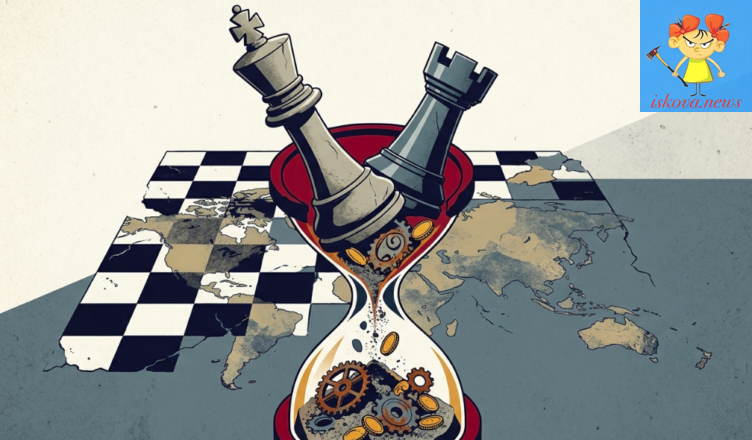
The Attrition Trap
What History Teaches About the Perils of Endless War—and How Nations Escape It
Wars of attrition rarely end in decisive triumph.
When an armed conflict stretches across years and decades, original political objectives dissolve, and the war becomes a self-perpetuating machine that consumes blood, treasure, and national vitality.
As the British military historian Lawrence Freedman has observed, contemporary conflicts increasingly depart from the classic model of decisive battle, hardening instead into «forever wars» in which sustaining the fight substitutes for a coherent theory of victory.
Five centuries of strategic history offer a sobering verdict: protracted wars almost always hollow out their belligerents from within—and escaping them demands agonizing, systemic reckoning.
The Architecture of Exhaustion
In his landmark 1987 study, The Rise and Fall of the Great Powers, the Yale historian Paul Kennedy identified the fatal dynamic he termed «imperial overstretch.»
Surveying half a millennium of geopolitical rivalry, Kennedy demonstrated that when a state’s military commitments and war expenditures outstrip the productive capacity of its economic base, relative decline becomes structural and irreversible.
Capital meant for innovation, infrastructure, and civilian growth is incinerated on the battlefield. In the seventeenth century, Habsburg Spain—mired simultaneously in the Thirty Years’ War and the Dutch Revolt—followed this exact trajectory, forfeiting its primacy in Europe to rivals that husbanded their resources.
Even more insidious than material depletion is the erosion of strategic purpose.
The Oxford military historian Sir Hew Strachan has long argued that in prolonged wars of attrition, operational logic subverts political control: leaders continue fighting not to achieve attainable diplomatic ends, but to validate the sacrifices already incurred.
That institutional inertia turned World War I into a civilizational cataclysm that resolved none of its underlying disputes while bringing down four empires—the Russian, German, Austro-Hungarian, and Ottoman—and clearing the path for twentieth-century totalitarianism.
For authoritarian regimes, however, endless conflict can also serve a perverse domestic function.
As the German military historian Marcus Keupp notes, prolonged warfare ceases to be an exceptional crisis and evolves into a permanent mode of governance—an instrument for regimenting society, centralizing economic rents, and silencing dissent.
Under such conditions, peace poses a greater threat to incumbent elites than continued bloodshed, because demobilization strips the state of its pretext for repression and economic stagnation.
Lessons From the Ruin of Empires
History’s ledger of protracted conflicts underscores how consistently attrition punishes its direct participants while rewarding bystanders:
The Peloponnesian War (431–404 BCE): Over twenty-seven years, the struggle between Athens and Sparta destroyed far more than fleets and city walls. As Thucydides chronicled, prolonged war corroded civic virtue and democratic norms, igniting savage civil strife inside the Greek poleis. Sparta claimed formal victory, yet both powers emerged so thoroughly depleted that they soon succumbed to an ascendant external hegemon: Macedon.
The Hundred Years’ War (1337–1453): Relentless war taxation, scorched-earth campaigns, and recurring waves of plague triggered violent social upheaval—from the Jacquerie in France to the Peasants’ Revolt of 1381 in England. Defeated on the continent, England turned its martial fury inward, plunging into the three-decade Wars of the Roses that decimated its ruling aristocracy.
The Soviet–Afghan War (1979–1989): Moscow’s decade-long quagmire offered a textbook confirmation of Kennedy’s overstretch thesis. Combined with collapsing oil revenues and widening technological lag, the financial and human toll of Afghanistan exacerbated domestic shortages and fatally eroded regime legitimacy, accelerating the dissolution of the Soviet Union just two years after the final troop withdrawal.
The Russo-Ukrainian Crucible
Now in its fifth year, the full-scale war between Russia and Ukraine exhibits nearly all the pathologies of historical attrition.
Analysts at the International Institute for Strategic Studies and defense scholars such as Michael Kofman note that the conflict has settled into a grinding positional contest in which neither side can execute a rapid operational breakthrough.
The proliferation of unmanned aerial systems, electronic warfare, and precision-strike networks has created a transparent, deeply layered «kill zone» along the front.
Any attempt to mass armor or infantry for a decisive offensive invites disproportionate casualties for marginal territorial gain—a stark validation of Strachan’s warning that tactical routine can eclipse strategic maneuver.
Meanwhile, both belligerents face acute, if asymmetric, resource constraints.
Ukraine contends with severe manpower pressures, demographic displacement, sustained bombardment of its energy grid, and dependence on the political durability of Western military and financial aid.
Russia, by contrast, absorbs staggering losses in personnel and materiel alongside a widening fiscal deficit, civilian industrial stagnation, and a structural distortion of its economy toward defense production—a contemporary manifestation of Kennedy’s imperial overstretch.
As researchers at France’s Foundation for Strategic Research have observed, unable to force a decisive collapse on the battlefield, Moscow has leaned heavily on «coercion through state degradation,» targeting energy and logistics infrastructure to exhaust Ukrainian society from within.
Viewed through the lens of conflict-resolution theory, the war persists because neither capital has yet reached what the political scientist William Zartman famously called a «mutually hurting stalemate»—the inflection point at which both sides perceive the cost of continuing the war as exceeding the painful price of compromise.
Furthermore, the involvement of external backers—from Ukraine’s European and transatlantic partners to Russia’s geopolitical enablers—has embedded a regional war inside a broader struggle over the international order, raising the political stakes of any concession.
Finding the Exit
Zartman’s «ripeness theory» suggests that protracted wars rarely end with one party dictating terms on the vanquished capital’s steps.
Instead, durable exits emerge only when exhaustion forces leaders to reframe their political objectives. History points to three recurring pathways out of the attrition trap:
Multilateral Architecture Building: The Thirty Years’ War could not be settled by a bilateral bargain between two monarchs; its religious and dynastic rivalries were too tightly knotted. Peace required years of parallel diplomacy in Münster and Osnabrück among dozens of European powers. Rather than enshrining total victory for one creed, the 1648 Peace of Westphalia established the principles of state sovereignty and balance of power, anchoring European statecraft for generations.
Territorial Freezing Without Final Settlement: By 1953, three years of ferocious combat on the Korean Peninsula had hardened into a bloody stalemate near the 38th parallel. Recognizing the futility of further offensives, the belligerents signed an armistice rather than a formal peace treaty, establishing a demilitarized zone. The guns fell silent—and over the ensuing decades, South Korea leveraged that uneasy stability to transform itself into a global economic powerhouse.
Domestic Political Realignment: When battlefield victory demands an unsustainable price, an exit often awaits a change in leadership or strategic doctrine at home. France escaped the Algerian War in 1962 only after Charles de Gaulle returned to power, faced down entrenched military resistance, and negotiated the Évian Accords. Similarly, Washington extricated itself from Vietnam through the 1973 Paris Peace Accords once American leaders concluded that domestic cohesion and global balance mattered more than salvaging local military prestige.
The overarching lesson of history’s longest wars is unambiguous: in a war of attrition, time is the enemy of every active belligerent.
Protracted conflict erodes economic foundations faster than states can replenish them, radicalizes domestic politics, and turns the home front into a casualty of war.
Almost invariably, the true beneficiaries are third-party powers that husband their strength while primary rivals bleed each other white.
True statecraft in a grinding conflict does not lie in promising an elusive, total victory regardless of cost.
It lies in possessing the strategic clarity to recognize a mutually hurting stalemate before internal exhaustion becomes irreversible—and the political courage to move the contest from the trenches to the negotiating table while a viable future still remains to be salvaged.
Last Updated on 26.11.2026 by iskova